Beyond the Gym: How Financial Stress Impacts Your Physical Health
We talk about diet, exercise, sleep — but the single largest driver of chronic illness in Canada may be something your doctor can't prescribe away: financial stress. Here's what the research says, and how a smarter financial plan can be your most powerful health intervention.
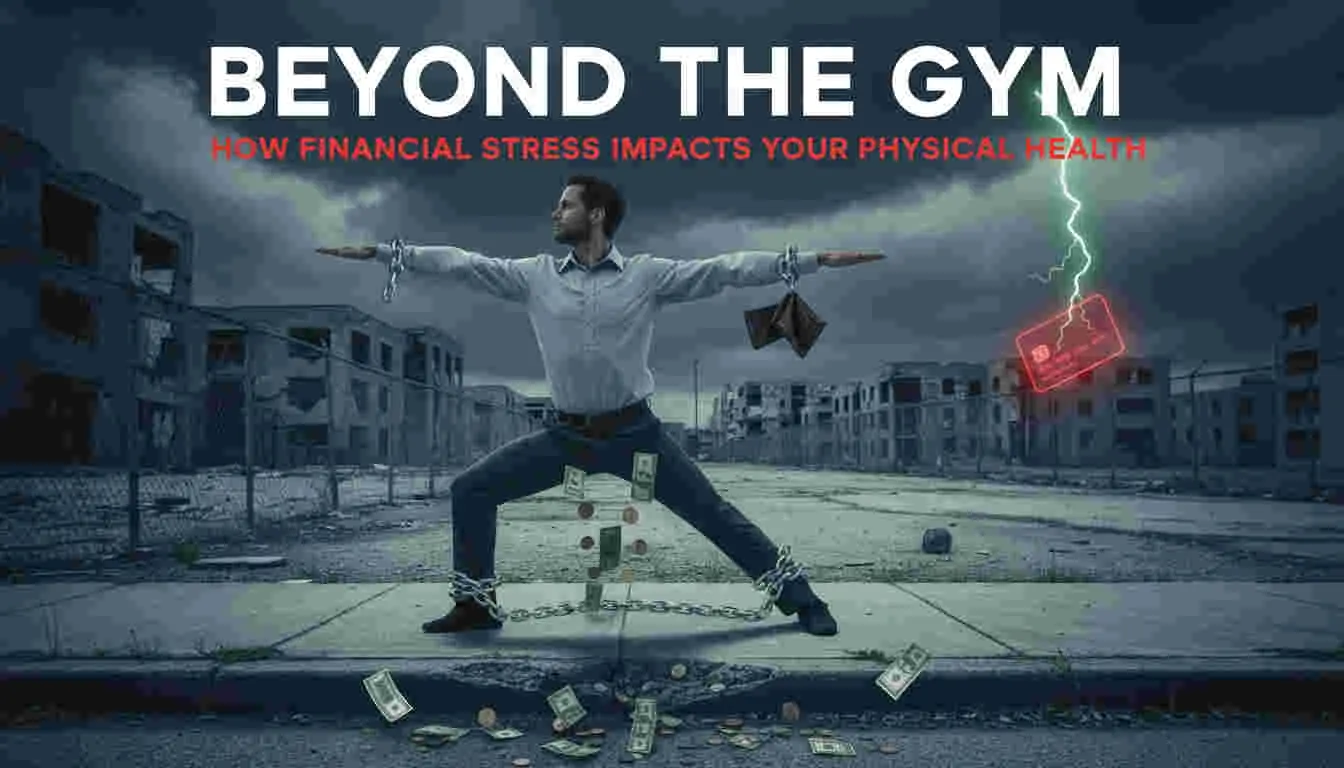
A client came to me two years ago carrying something most people wouldn't associate with a financial advisor: a recent diagnosis of hypertension. She was 44, active, non-smoking, ate well. Her cardiologist had prescribed medication, but in our conversation, we discovered that the real driver was something no pill could address: she had been lying awake every night for three years worrying about money.
Her story isn't unusual. It's epidemic.
The Cortisol Connection
When you experience financial stress — whether it's debt you can't see the end of, an income that doesn't stretch to month's end, or the terror of not having an emergency fund — your body responds the way it would to any perceived threat: it floods your system with cortisol.
Cortisol is your primary stress hormone. In short bursts, it's lifesaving — it sharpens your reflexes and focuses your attention. But in chronic exposure, it becomes a slow poison.
Chronic cortisol elevation is linked to:
- Elevated blood pressure and cardiovascular strain
- Immune system suppression, making you more susceptible to infections and slower to heal
- Disrupted sleep architecture — leading to fatigue, cognitive impairment, and metabolic disruption
- Increased visceral fat accumulation (the dangerous fat that surrounds organs)
- Accelerated cellular aging — a 2019 study found that chronic stress can add up to 10 years of biological aging at the cellular level
- Heightened risk of depression and anxiety disorders
Research published in the American Journal of Epidemiology found that individuals who reported high financial stress had a 13% higher all-cause mortality rate over a 10-year period — even after controlling for income level, smoking, BMI, and access to healthcare.
Let that sink in: not financial poverty, but financial stress. The worry itself causes measurable physical harm.
The Immune Suppression Effect
Your immune system is exquisitely sensitive to psychological state. Under chronic stress, it produces fewer antibodies, lowers natural killer cell activity, and slows inflammatory response.
This means people experiencing prolonged financial stress are more likely to catch colds and flu, take longer to recover from injuries, and mount a weaker immune response to vaccines. It also means they're at higher risk for autoimmune flare-ups, since immune dysregulation cuts both ways.
For Canadians already navigating a healthcare system under strain — longer wait times, reduced GP availability, mental health waitlists stretching into years — this is a serious compounding problem. You are more likely to get sick, and less likely to get treated quickly.
Cardiovascular Strain
The link between financial stress and heart disease is among the most robustly documented in psychosomatic medicine. A comprehensive 2020 study published in the European Heart Journal found that financial hardship was independently associated with a 13–18% elevated risk of major cardiac events — myocardial infarction, heart failure, stroke — in people with no prior cardiac history.
The mechanism is multifactorial. Chronically elevated cortisol raises blood pressure. Sleep deprivation (a near-universal feature of financial stress) disrupts the heart's normal recovery cycle during sleep. And the lifestyle consequences of financial stress — reduced physical activity, worse diet, increased substance use — all compound cardiac risk.
"The financial plan that protects your income also protects your heart. These are not separate conversations." — Advisor
Financial Toxicity: A Term Worth Knowing
"Financial toxicity" is a term originally coined in oncology to describe the devastating financial consequences of cancer treatment — and the way those financial consequences, in turn, worsen health outcomes. Patients who couldn't afford treatment compliance had worse survival rates. The financial burden of illness was itself killing people.
But the concept has expanded. Financial toxicity now describes any situation where financial stress actively worsens health — creating a devastating feedback loop. You get sick because of financial stress; your illness reduces your income; your reduced income increases your financial stress; your increased stress worsens your illness.
Breaking this loop requires intervention on the financial side — not just the health side.
Life & Disability Insurance as Preventative Medicine
Here's where the financial plan becomes a health plan.
The number-one source of financial stress in Canada is income disruption — the fear (or reality) that illness, injury, or death will remove the income that a family depends on. And yet, as of 2023, fewer than 30% of Canadians have any form of individual disability coverage beyond the basic CPP disability benefit — which, for most earners, covers less than 30% of their income.
Disability insurance is, quite literally, preventative medicine. By guaranteeing income continuation in the event of illness or injury, it removes the financial terror that compounds health crises. A person who breaks their leg and can't work for three months faces a very different psychological — and therefore physical — recovery depending on whether they have two months of expenses or two years of income protection.
Life insurance plays a similar role — not for the insured, but for the family they leave behind. Grief is already physiologically devastating. Financial terror layered onto grief is nearly unbearable. The psychological (and physical) health outcomes for surviving spouses with adequate life insurance coverage are measurably better than for those without.
Critical Illness Insurance: The Gap Most People Don't Know Exists
You survive a heart attack. You beat cancer. You recover from a stroke. But you can't work for eight months while you recuperate, and your treatment required significant out-of-pocket expenses not covered by provincial health care.
This is the gap that Critical Illness insurance exists to fill — and it's the product I recommend most urgently to clients who don't have it.
A Critical Illness (CI) policy pays a tax-free lump sum upon diagnosis of a covered condition — typically cancer, heart attack, stroke, organ failure, MS, Parkinson's, and others. The payout (commonly $50,000 to $500,000) can be used for anything: treatment not covered by OHIP or AHCIP, income replacement during recovery, household adaptations, specialist access, or simply the peace of mind that your family won't be financially destroyed by your medical crisis.
With 1 in 2 Canadians expected to receive a cancer diagnosis in their lifetime, CI insurance is no longer a niche product — it's a cornerstone of any complete financial protection plan.
Health Spending Accounts (HSAs): Tax-Smart Healthcare Funding
For self-employed Canadians and business owners, a Health Spending Account (HSA) is one of the most underutilized tools in the financial planning toolkit. An HSA allows you to pay for eligible health and dental expenses with pre-tax dollars — effectively giving you a 30–50% discount on medical costs depending on your marginal tax rate.
This matters enormously for the financial toxicity discussion. When medical expenses are predictable and tax-sheltered, the financial stress associated with healthcare costs — even significant ones — is substantially reduced. HSAs also cover expenses that employee benefit plans commonly exclude: orthodontics, laser eye surgery, naturopathic care, and psychological counselling (itself directly relevant to the financial stress we've been discussing).
The Health & Wealth Audit
In my practice, I've developed what I call a Health & Wealth Audit — a structured review of a client's financial protection through a health lens. We look at:
- Income continuity: if you couldn't work for 6 months, what happens to your household?
- Critical illness exposure: what would a cancer diagnosis or cardiac event cost you beyond medical bills?
- Survivor protection: would your family be financially secure if you died unexpectedly?
- Healthcare cost coverage: are you maximizing available tax vehicles for medical expenses?
- Stress architecture: where in your financial life is uncertainty causing ongoing anxiety?
The goal isn't just to build a better financial plan. It's to build a plan that removes the psychological burden of financial insecurity — because that burden has a measurable, physical cost.
Your Body Is Keeping Score
Dr. Bessel van der Kolk famously wrote that "the body keeps the score" — that psychological trauma and stress are stored not just in the mind, but in the body's tissues and systems. Financial stress is no different.
You deserve a financial plan that protects not just your balance sheet — but your health, your sleep, and your years. If you've been carrying financial worry as a physical weight, I'd like to help you put it down.

Advisor
Wealth Coach · Canada's #1 Sales Leader
Advisor has spent 20+ years helping financial professionals and their clients build protection, grow wealth, and create lasting legacies.